
Service
Storm Damage Roof Repair in Cleveland & Northeast Ohio
A thorough damage assessment first - so your claim and your repair both reflect what actually happened.
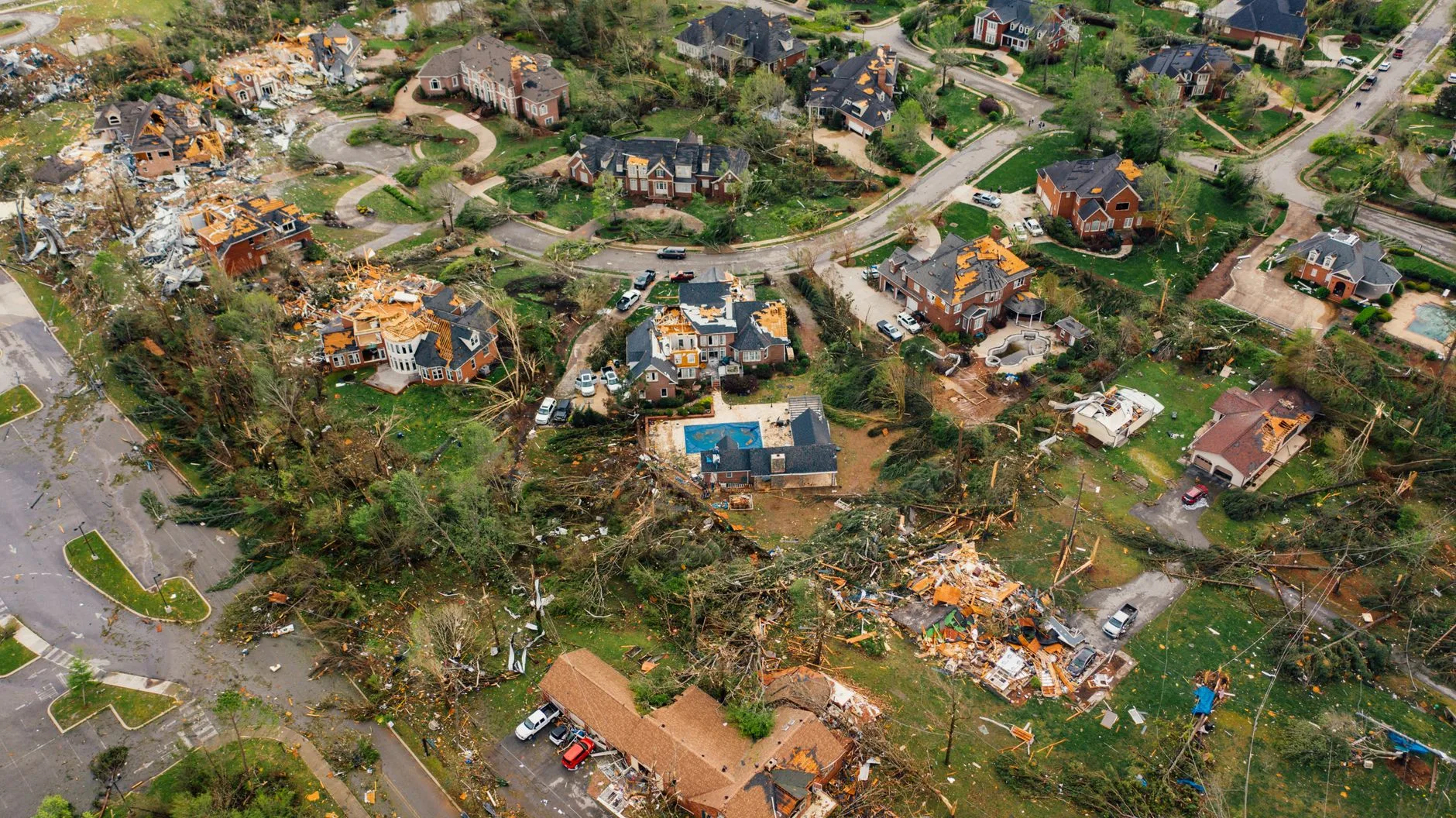
Northeast Ohio sits in a corridor that gets hit by both Lake Erie-driven storm systems and the broader Midwest severe weather pattern - straight-line wind events in summer, hail bands that move through with fast-developing thunderstorms, and occasional derecho-strength gusts that do real damage in a matter of minutes. Storm damage roofing is about assessing what actually happened to your roof, not assuming the worst or, just as often, missing damage that isn’t visible from the ground.
What Storm Damage Actually Looks Like
Wind damage often shows up as lifted or missing shingle tabs, especially along ridgelines and roof edges where uplift force concentrates. Hail damage is subtler - bruised or fractured shingle mat that doesn’t necessarily leak right away but accelerates granule loss and shortens the roof’s remaining life by years. Debris impact from tree limbs is usually obvious, but the surrounding shingles knocked loose in the same event sometimes aren’t checked closely enough by a fast estimate.
Our Assessment Process
We inspect the full roof, not just the area you flagged as damaged, because storm force rarely confines itself to one spot. That means checking flashing, ridge caps, and any roof penetrations in addition to the shingle field itself. Every assessment is photographed and documented in a format built to hand directly to an insurance adjuster.
Repair or Replace - An Honest Answer
Isolated wind damage on an otherwise sound, reasonably current roof is very often a repair. Widespread hail bruising across the whole roof, or storm damage layered onto a roof that was already near end-of-life, points toward replacement being the more sensible long-term call. We’ll tell you which situation you’re in and why, rather than defaulting to whichever answer is more profitable for us.
Working Alongside Your Insurance Claim
We’re not a public adjuster and we don’t negotiate your policy on your behalf, but the documentation we provide is built to support your claim: clear photos, a written damage summary, and an itemized repair or replacement scope that matches what an adjuster needs to process the claim fairly. See our insurance claims assistance page for more detail on how that process typically works.
Storm Damage Follows a Seasonal Pattern Here
Northeast Ohio’s storm risk isn’t evenly distributed across the year, and knowing the pattern helps us know what to look for. Summer brings fast-moving thunderstorm complexes, sometimes producing straight-line wind gusts strong enough to lift ridge caps and occasionally hail, often with less warning than a slower-developing system would give. Late fall and winter shift toward sustained lake-effect wind events, capable of significant shingle damage even without any precipitation at all, plus the ice-dam-related failures that show up during winter thaws. An assessment in July looks for different things first than one in January, even though both check the same roof systematically.
Damage That Doesn’t Show Up Until Later
One of the more underappreciated storm damage patterns is delayed failure - a wind event that loosens a shingle’s fasteners or partially lifts an edge without fully tearing it free. From the ground, and sometimes even on a rushed inspection, that shingle looks intact. It isn’t. The next moderate wind event, sometimes weeks or months later and nowhere near as strong as the original storm, finishes the job. This is exactly why we check ridge caps, edges, and fastening patterns across the whole roof after any significant event, not just the areas with obvious, complete damage - a shingle at 80 percent failure today needs the same attention as one that’s already torn off.
Debris Impact Damage: More Than the Obvious Hole
A fallen limb or wind-blown debris strike often causes damage well beyond the immediately visible impact point. The surrounding shingles can be knocked loose or cracked by the same impact, and if the strike is heavy enough, the deck sheathing underneath can crack or split even when the roofing material on top looks patchable. We inspect the full area around any debris strike, including from inside the attic where accessible, rather than assuming the visible hole is the entire scope of the damage.
Storm Damage Across Different Roof Types
A pitched asphalt shingle roof and a flat commercial membrane roof fail differently in the same storm. Wind primarily threatens shingle uplift and ridge cap loss on pitched roofs, while on flat roofs, wind-driven debris and ponding water from a storm’s rainfall volume are bigger concerns, since membrane systems don’t shed water by gravity the way a pitched roof does. We adjust the assessment approach based on roof type, which matters for both homeowners with additions or porches and for the commercial buildings we service across the same storm systems.
What's Included
- Full on-roof storm assessment, not a drive-by estimate
- Damage documentation formatted for insurance adjusters
- Wind, hail, and debris damage repair from the same crews who handle full replacements
- Straight answers on repair versus replacement, without steering toward the bigger job
- Coordination with your insurance timeline so tarping and permanent repair stay on schedule
Frequently Asked Questions
How do I know if a storm actually damaged my roof?
Should I call my insurance company or a roofer first after storm damage?
Does storm damage always mean a full roof replacement?
How soon after a storm should I get my roof checked?
What Northeast Ohio storm patterns cause the most roof damage each year?
Can one storm cause damage that only shows up after a later, smaller storm?
Related Services
More on Storm Damage Roofing
Guides and cost breakdowns related to this service.
Get Your Free Storm Damage Roofing Estimate
Tell us about your project and we'll follow up within one business day - no obligation.
Prefer to talk it through first?
Call (216) 424-3811