
Service
Wind Damage Roof Repair in Cleveland & Northeast Ohio
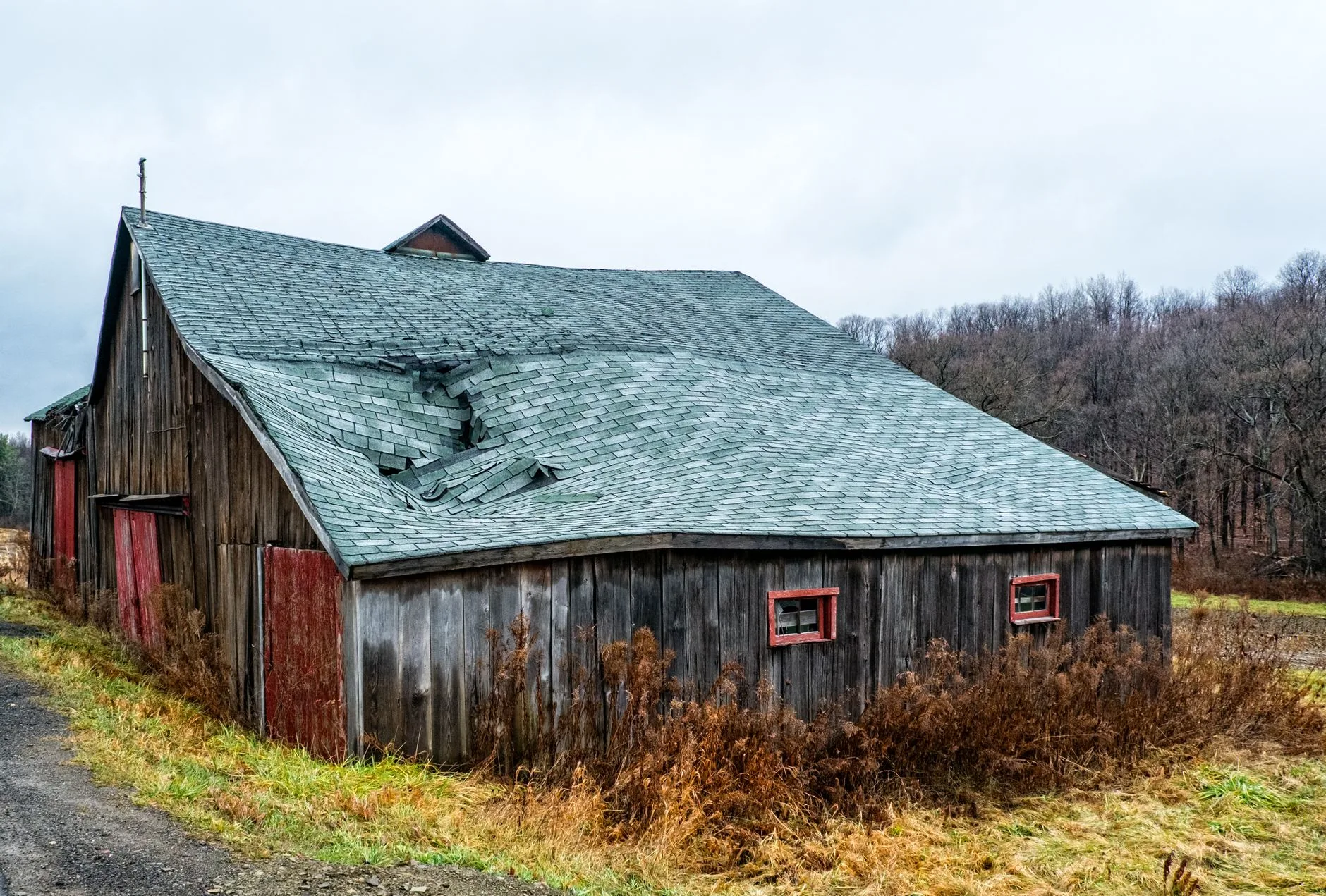
Wind rarely damages a roof evenly - we check the whole field, not just the obvious spot.
Wind doesn’t damage a roof evenly. It concentrates uplift force at ridges, eaves, and corners - the same physics that make those areas the first to fail in a strong gust, and the reason wind damage often shows up as a narrow strip of missing shingles along a ridge rather than scattered evenly across the whole roof.
Why Lakefront Suburbs See More of This
Communities directly exposed to Lake Erie - Lakewood, Bay Village, Avon Lake - regularly experience higher sustained wind speeds than inland suburbs, with less tree cover and terrain to break up gusts before they hit a roof. We see a disproportionate share of wind damage calls from these areas, particularly after fast-moving storm systems that bring a short burst of very high wind rather than a prolonged event.
What We Check Beyond the Obvious Damage
A homeowner will often spot missing shingles in one visible area and assume that’s the extent of it. We check ridge caps, roof edges, and corners across the entire roof, since wind stress frequently causes secondary lifting or nail-pull in areas that haven’t fully failed yet but will during the next event if left alone. Catching that now is a far smaller repair than waiting for it to become a leak.
Repair Approach
Where shingles are missing or torn but the deck underneath is intact, we replace the damaged courses, matching existing shingle stock as closely as possible, and reinforce the nailing pattern in the repaired section to reduce the chance of a repeat failure in the next wind event. Ridge cap and edge flashing get particular attention, since a repair that ignores those details tends to fail again within a season or two.
Insurance Considerations
Sudden wind damage is typically a covered event under Ohio homeowners policies, though wind/hail deductibles often differ from your standard deductible - worth checking your specific policy. We document damage thoroughly enough to support a claim and can advise honestly on whether what you’re seeing looks like storm-related damage or ordinary wear.
Which Roof Slopes Take the Worst of It
Prevailing wind off Lake Erie tends to hit west- and northwest-facing roof slopes hardest across most of our service area, which is why we pay particular attention to those planes during any wind damage assessment. A ridge running perpendicular to that prevailing direction sees more sustained uplift pressure on one side than the other, and homes on exposed lots without wind-breaking tree cover or neighboring structures - common on larger lots in Avon and North Olmsted, as well as directly along the Bay Village and Rocky River shoreline - take more direct wind load than a similar home tucked into a denser, more sheltered block.
Nailing Pattern: The Detail Most Wind Damage Traces Back To
The single biggest factor in whether shingles survive a wind event isn’t the shingle’s wind rating on paper - it’s whether it was actually fastened within the manufacturer’s nailing zone with the correct number of fasteners. A shingle rated for 130 mph winds that was under-nailed or nailed high on the shingle (a common shortcut on rushed installations) can lift at wind speeds well below its rated capacity. When we repair wind damage, we check the nailing pattern on the surrounding intact shingles, not just the damaged section, because a section that failed due to poor original installation usually has neighbors that will fail the same way in the next storm.
Distinguishing Wind Damage From Ordinary Wear
Insurance adjusters draw a hard line between sudden, wind-caused damage and gradual wear-and-tear, and that distinction determines whether a claim gets approved. Wind damage typically shows a directional, event-linked pattern - torn or missing shingles concentrated on one slope, clean tear lines at the nail line, and a clear timeline tied to a specific storm date. Ordinary aging shows up more evenly across the whole roof as granule loss, shingle curling, and brittleness, without the directional concentration wind produces. We document which pattern we’re seeing and why, which matters directly for how a claim is likely to be received.
Repeat Wind Events and Cumulative Damage
A roof that’s taken several wind events over a few years without full assessment after each one can accumulate damage that isn’t obvious from any single inspection - a shingle loosened in one storm that finally tears free in the next, for instance. If your roof has a history of wind-related repairs, it’s worth a fuller inspection rather than treating each new event as an isolated incident, since the cumulative pattern often tells a more accurate story about the roof’s overall wind resistance than any one repair does.
What's Included
- Full-roof wind damage assessment, not just the section that's visibly missing shingles
- Repair matched to existing shingle line when stock allows
- Ridge cap and edge flashing checks, the first places wind damage originates
- Documentation suitable for an insurance claim if the damage qualifies
- Straight guidance on repair versus replacement based on extent of damage
Frequently Asked Questions
How much wind does it take to damage a roof in Cleveland?
Why did wind only damage part of my roof and not the whole thing?
Can wind-damaged shingles be repaired, or does the whole roof need replacing?
Will my insurance cover wind damage repair?
Does the direction a roof slope faces affect wind damage risk?
What's the difference between wind damage and just old, worn shingles?
More on Wind Damage Repair
Guides and cost breakdowns related to this service.
Get Your Free Wind Damage Repair Estimate
Tell us about your project and we'll follow up within one business day - no obligation.
Prefer to talk it through first?
Call (216) 424-3811